
How Big Do KuneKune Pigs Get?
Adult KuneKunes typically weigh 150-300+ pounds. They're small for pigs — but "small pig" is still a real pig. Here's what to expect.

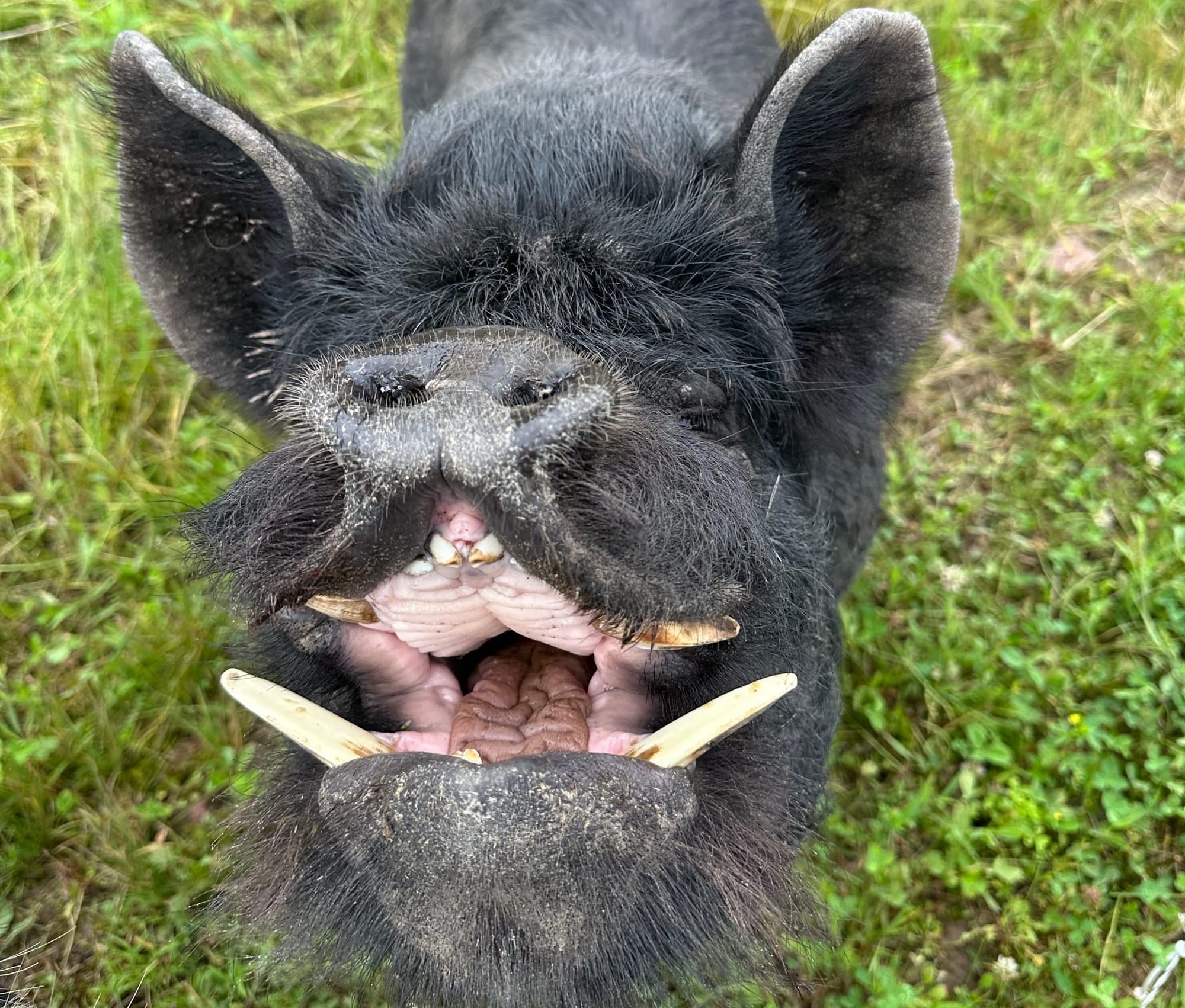
It's one of the most common questions we hear: "How big will my KuneKune get?" The answer matters, whether you're planning pasture space, building shelters, or just trying to understand what you're signing up for.
Here's the honest answer, along with some context that will help you plan appropriately.
The Short Answer
Adult KuneKune pigs typically weigh:
- Sows (females): 150-250 lbs, with some reaching 300+ lbs
- Boars (males): 200-300 lbs, with some reaching 400+ lbs
Height at the shoulder is generally 20-26 inches.
These are ranges, not guarantees. Genetics, diet, and individual variation all play a role. The pig you bring home as a 10-pound piglet will grow into a substantial animal.
They're Small for Pigs — Not Small
KuneKunes are one of the smallest domestic pig breeds, but "small pig" is relative. A 200-pound animal is still a 200-pound animal. They're compact, not miniature.
For comparison:
- Commercial pig breeds (Yorkshire, Hampshire, Duroc) routinely reach 500-800 lbs
- Large Black and Gloucestershire Old Spots can exceed 600 lbs
- Potbellied pigs typically range from 100-200 lbs
KuneKunes fall between potbellied pigs and full-sized heritage breeds. They're manageable for small farms and homesteads, but they're real livestock.
There's No Such Thing as a "Mini" or "Micro" KuneKune
Let's address this directly: if someone is selling you a "mini KuneKune" or "teacup KuneKune," be skeptical. These terms are marketing, not genetics.
Some breeders select for smaller size, and there is natural variation in the breed — some bloodlines do run smaller. But there is no separate miniature variety of KuneKune. A piglet from small parents may stay on the smaller end of the range, or it may not. Some breeders achieve smaller pigs by underfeeding, which you can guess our position on that.
If size is a major concern for your situation, ask the breeder about the size of the parents and grandparents. That's your best predictor. But plan for a pig that could reach 200+ pounds, because that's the reality of the breed.
Growth Timeline: When Do They Reach Full Size?
KuneKunes are slow-growing compared to commercial breeds. This is part of what makes them suitable for small-scale farming — they're not optimized for rapid weight gain.
Here's a general timeline:
Birth: 1-2 lbs
8-10 weeks (weaning): 15-30 lbs
6 months: 50-80 lbs
12 months: 100-150 lbs
2 years: 150-250 lbs
3-4 years: Full adult size
That last point is important: KuneKunes aren't fully mature until 3-4 years old. A pig that seems "small" at one year may have significant growing left to do. Don't assume you've got a small pig just because they're compact at 18 months.
What Affects Size?
Several factors influence how big an individual KuneKune will get:
Genetics
This is the biggest factor. Size tends to run in bloodlines. If both parents are on the larger end of the breed standard, expect larger offspring. If you're buying from a breeder, ask about the size of the parents and, if possible, grandparents.
Sex
Boars are typically larger than sows, often 25-50% heavier at maturity. If you're keeping pigs as pets or for a small homestead and want to minimize size, gilts (females) or barrows (castrated males) are your best bet.
Diet
Overfeeding will make a pig fat, not necessarily taller or longer, but definitely heavier. KuneKunes are lard pigs. They're genetically inclined to put on fat easily. A pig fed excessive grain or treats will end up obese, which causes health problems and can make them look much larger than a pig of the same frame in proper condition.
Conversely, underfeeding won't keep a pig small. It will just result in a malnourished pig that eventually reaches its genetic potential anyway, just unhealthily.
Age
As noted above, KuneKunes continue growing until 3-4 years old. A "small" yearling may surprise you. Even runts of the litter typically catch up to their siblings given time and proper nutrition. A small piglet doesn't necessarily mean a small adult.
Size vs. Condition: Know the Difference
A common mistake is confusing an overweight pig with a large pig. KuneKunes should have a visible waist when viewed from above and you should be able to feel (but not see) their ribs. A pig that looks like a barrel with legs is probably overweight, not just big-boned.
Proper body condition matters for health, breeding success, and longevity. If you're unsure whether your pig is the right weight, the EKPA publishes a helpful body condition scoring chart that shows what healthy KuneKunes should look like at various weights.
Planning for Size
When setting up for KuneKunes, plan for adult size, not piglet size:
Fencing: Needs to contain a 200+ pound animal that's low to the ground. Two strands of electric at snout height (6" and 12") work well – remember pigs can't jump – or sturdy hog panels.
Shelter: Should accommodate full-grown pigs lying down comfortably. A farrowing stall needs to be at least 8x8 feet; general shelters should give each adult pig room to not only lay down but also turn around.
Transport: A large dog crate works for piglets; adults need a livestock trailer.
Handling: You cannot pick up an adult KuneKune. Training them to move calmly with a sorting board or to follow a feed bucket is essential and easy to do.
The Bottom Line
KuneKunes are wonderful pigs — friendly, manageable, and well-suited for small farms. But they're not tiny. Plan for an animal that will weigh 150-300+ pounds at maturity, stand about two feet tall, and live 12-15 years on average — some up to 20.
If that sounds like more pig than you bargained for, that's good information to have now, before you bring one home. If it sounds perfect, welcome to the club!
Questions about KuneKune size or what to expect as your piglet grows? Drop them in the comments!