
Preparing for Farrowing Day: Signs, Setup, and What to Expect
Everything we wish we'd known before our first farrowing — signs to watch for, how to set up your space, and when to intervene.

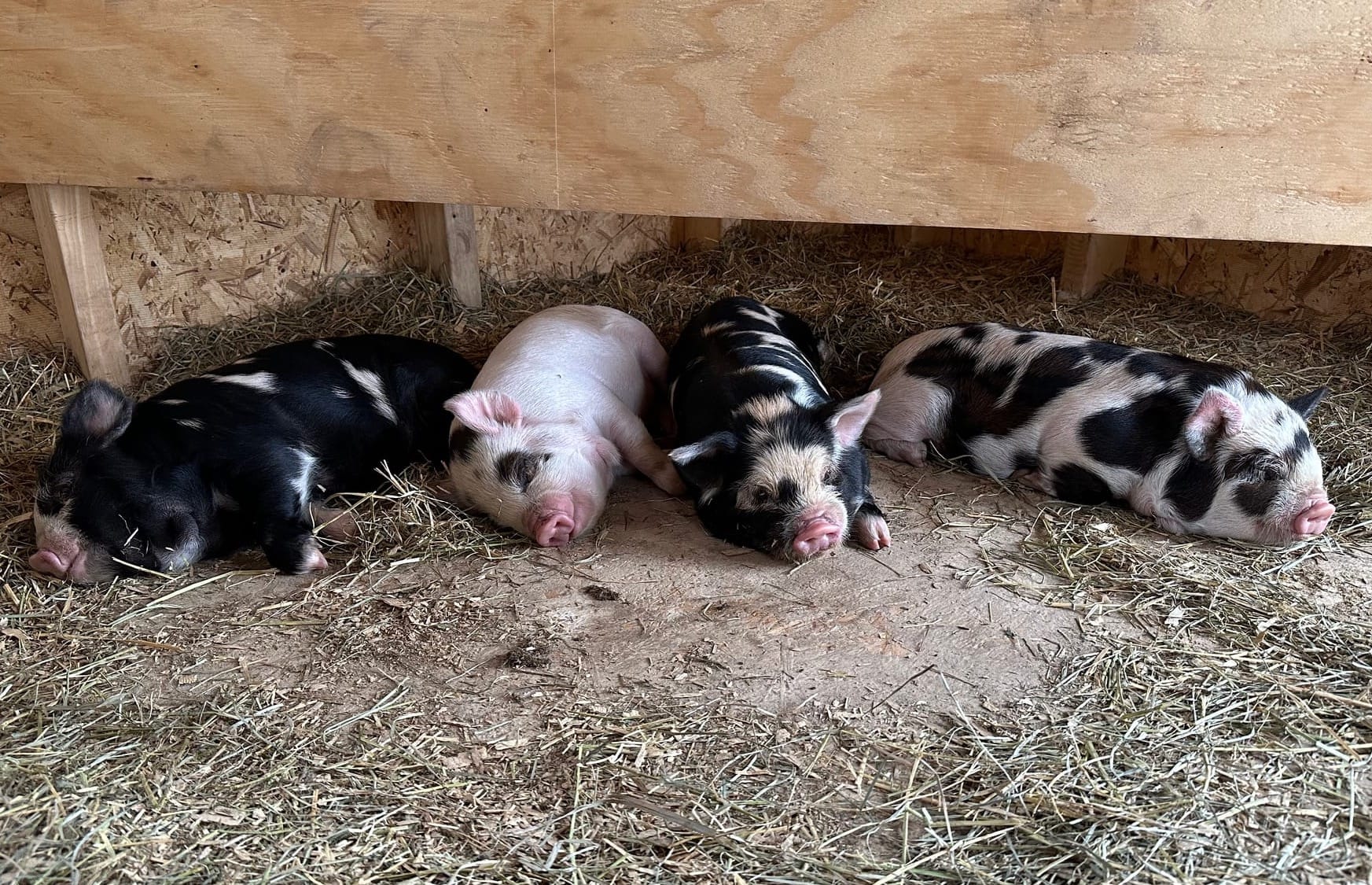
Farrowing day is one of the most exciting, and nerve-wracking, experiences in raising KuneKunes. After 116 days of waiting, you're about to meet the newest members of your herd. Whether this is your first litter or your tenth, proper preparation and knowing what to watch for can make the difference between a smooth delivery and a stressful one. Here's what we've learned from our farrowings and what we wish we'd known from the start.
Know Your Due Date
KuneKunes have a gestation period of approximately 116 days — the easy way to remember this is "3 months, 3 weeks, and 3 days." If you've been raising KuneKunes, you also know to usually add "and 3AM" since they never farrow at a convenient time. If you've been tracking heat cycles and know your breeding date, you can calculate your expected farrowing window. We have a farrowing calculator on our website if you want to skip the math.
That said, sows don't read calendars. Some farrow a few days early, others a few days late. Use the due date as a guide, but watch your sow's physical signs as the real indicator.
Signs That Farrowing Is Approaching
As your sow gets closer to delivery, her body will give you clues. Here's what to watch for:
1-2 Weeks Out:
- Her belly drops noticeably — in the final days, it may look like it's nearly dragging on the ground
- Udder development becomes more pronounced
- Vulva begins to swell and relax
- You should be able to observe babies kicking
24-48 Hours Out:
- Vulva becomes very loose and elongated, with visible wrinkling on the sides
- Nesting behavior intensifies — she'll rearrange bedding, sometimes obsessively
- Restlessness, getting up and down frequently
- Loss of appetite (though some sows eat right up until labor)
Within 24 Hours:
- Milk can be expressed from the teats — if you get milk (or colostrum), farrowing is typically within 24 hours
A note on checking for milk: while it's a useful indicator, we recommend not doing this repeatedly. Every time you express milk, you're potentially introducing bacteria into the teat canal, and you're also releasing colostrum that should go to the piglets. Check once to confirm she's close, then leave her be.
Setting Up Your Farrowing Area
Your farrowing setup doesn't need to be fancy, but it does need to be safe. Here's what we consider essential:
Space
A farrowing stall of at least 8x8 feet gives the sow room to move and farrow comfortably. The sow will be in this space with her piglets for around 8 weeks, so give them room to grow.
Farrowing Rails (Crush Rails)
These are non-negotiable for us. Farrowing rails are bars mounted around the inside perimeter of the stall, about 8-10 inches off the ground and 8-10 inches from the wall. They create a protected space where piglets can escape if the sow lies down. Without them, piglets can get crushed against the wall when mom shifts position.
We've heard people say KuneKunes are careful mothers and don't need rails. Some are. Some aren't. The rails are cheap insurance.
Creep Area
A creep area is a section of the stall that piglets can access but the sow cannot — typically created with rails or boards about 10-12 inches off the ground. This serves several purposes:
- Provides a safe warm zone away from the sow
- Allows you to hang heat lamps lower (out of the sow's reach)
- Gives you a place to offer piglet feed and water as they grow
Heat Source
Piglets need a 95°F environment for the first two weeks of life. They're born wet, with minimal body fat, and can become hypothermic quickly. We use heat lamps with extension cords since we don't have permanent electricity in our barn.
A critical word on heat lamp safety: Heat lamps are a leading cause of barn fires. Secure them properly — not with the clamp alone, but with chains or wire so they can't fall into bedding if bumped. Keep them away from anything flammable. Check connections regularly. We've heard too many horror stories. The warmth isn't worth it if it burns down your barn.
Some breeders use heated mats as an alternative. Whatever you choose, make sure piglets have access to warmth but can also move away from the heat source if they get too warm.
Bedding
Deep straw bedding — we're talking several inches to a foot or more — provides insulation, cushioning, and nesting material. The sow will rearrange it to her liking. Deep bedding also creates air pockets that can help a piglet survive if it gets laid on briefly.
Cameras
We keep cameras on our farrowing sows and check them frequently, especially in the first week. This lets us monitor without constantly disturbing the sow. The first few days are the most critical for piglet survival — being able to check in remotely means we catch problems early without adding stress.
Supplies to Have on Hand
Gather these before your sow is due:
- Clean towels — for drying piglets and clearing airways
- Iodine (7%) — for dipping umbilical cords
- Sharp scissors or umbilical clippers — for trimming cords
- Umbilical clips (optional) — we're planning to try these
- OB gloves (shoulder-length) — in case you need to assist
- Lubricant — for assisted delivery
- Oxytocin — to stimulate contractions if needed (more on this below)
- Calcium source — yogurt or Tums to support uterine contractions
- Molasses or corn syrup — to boost the sow's blood sugar if labor is prolonged
- Heat lamp or heating pad — already set up and tested
- Digital thermometer — for checking piglet or sow temperature
- Notebook and pen — for recording notes
What to Expect During Farrowing
Once labor begins, here's the general timeline:
Early Labor: The sow will be restless, nesting, possibly vocalizing. This stage can last several hours. She may get up and down repeatedly, rearranging bedding.
Active Labor: Once contractions become visible and regular, piglets typically start arriving. Most KuneKune litters are 4-6 piglets, though we've had as few as 3 and as many as 9. Piglets are usually born every 20-60 minutes, with the entire process taking anywhere from 2-6 hours for most sows.
Between Piglets: The sow may rest between deliveries — some even take short naps. This is normal. We generally wait about an hour between piglets before starting to worry. If it's been significantly longer than that and she's actively straining with no progress, it may be time to assess whether a piglet is stuck.
Placenta: Pigs have a bicornuate uterus (two horns), so you may see two separate placentas — one from each horn — or they may pass as one mass. The afterbirth typically passes within one to four hours after the last piglet, though sometimes pieces pass during farrowing itself. The sow may eat it — this is normal behavior — but we recommend removing the placenta once it's passed so curious piglets don't attempt to eat it and choke. If placentas haven't passed within several hours of the last piglet, or if you suspect retained placenta, contact your vet.
Assisting Piglets at Birth
Our philosophy is to intervene when needed. Given the investment we have in our pigs — both financial and emotional — we'd rather be hands-on than lose a piglet to something preventable. That said, many KuneKune sows farrow without any assistance at all.
Here's what we do:
Clear the Airways: As each piglet is born, we towel off the "gunk" (amniotic fluid and membranes) and make sure the mouth and nose are clear. A piglet that can't breathe won't survive.
Trim and Dip the Umbilical Cord: We trim the umbilical cord to about 2-3 inches and dip it in iodine to prevent infection. The cord will dry up and fall off within a few days.
A warning about umbilical cords: Don't skip trimming. We learned this the hard way. We lost a piglet when the sow stepped on a long, untrimmed umbilical cord. When the piglet jerked away, it essentially pulled out its own intestines. It was devastating and entirely preventable. Trimming the cord to 2-3 inches removes this risk while still leaving enough length for proper healing.
Help Them Find a Teat: Newborn piglets are wobbly and uncoordinated for the first 30 minutes or so. We'll gently guide them toward the udder if they're struggling to find it. Colostrum — the first milk — is critical. Piglets need it within the first few hours of life, ideally within the first hour. It provides antibodies and energy they can't get any other way.
When Things Don't Go Smoothly
Most KuneKune farrowings are uncomplicated, but problems do happen. Here's what to watch for:
Stuck Piglet
If the sow has been actively straining for 30+ minutes with no progress, a piglet may be stuck in the birth canal. Signs include visible distress, repeated unproductive pushing, and sometimes a piglet visible at the vulva but not progressing.
To check:
- Wash the vulva area thoroughly
- Put on a shoulder-length OB glove with plenty of lubricant
- Gently insert your hand, cupping your fingers into a cone shape
- Feel for a piglet and its position
If you can reach a piglet, you may be able to gently reposition and guide it out. If you can't reach anything or the sow seems to be in serious distress, call your vet.
Important: Do not give oxytocin if a piglet is stuck. Oxytocin stimulates uterine contractions — if there's an obstruction, stronger contractions will only cause more damage. Clear the obstruction first.
Weak Contractions
If the sow seems to have stalled — she's had some piglets but contractions have weakened and she's not progressing — calcium and oxytocin may help.
Calcium (from yogurt or Tums) supports muscle contractions. Oxytocin directly stimulates the uterus. Only use oxytocin after confirming there's no obstruction, and follow dosing guidance from your vet.
Exhausted Sow
Long labors are hard work. If your sow seems depleted, a little molasses or corn syrup can help boost her blood sugar and energy. Make sure she has access to water.
Cold or Weak Piglets
Piglets that wander away from the sow or are born last in a large litter may become cold and weak. Get them under the heat lamp, dry them thoroughly, and once they're warm and active, help them get to a teat. Hypothermic piglets can't nurse effectively, so warmth comes first.
The First Week
The first 3-7 days are the highest-risk period for piglet mortality. Crushing, hypothermia, and failure to thrive are the main concerns. This is why we monitor closely with cameras and check frequently.
Watch for:
- Piglets nursing regularly (you'll see their bellies fill out)
- Active, curious behavior
- Even weight gain across the litter
- The sow settling into a rhythm of nursing and resting
A piglet that's constantly crying, always away from the group, or not gaining weight needs intervention — possibly supplemental feeding or a vet check.
A Note on Overfeeding Before Farrowing
One mistake we see new breeders make is increasing the sow's feed during pregnancy, thinking she needs extra nutrition for the piglets. With KuneKunes, this can backfire. Extra calories leads to bigger piglets. And bigger piglets are harder to deliver.
Maintain your sow's normal ration through pregnancy. She'll need increased nutrition during lactation, not before.
It's Worth It
Farrowing can be stressful, especially your first time. But watching a sow bring new life into the world — and seeing the mom sing to her piglets — is one of the most rewarding experiences in raising KuneKunes.
Prepare your space. Gather your supplies. Watch for the signs. And trust that thousands of years of pig instincts are on your side.
Questions about farrowing or want to share your own experience? Drop them in the comments!