
Reflecting On My 2019 Deer Season
Reflecting on the highs and lows of the 2019 season: tractor problems, wet fields, soybeans behind a dual-perimeter fence, and two perfectly executed hunts that made it all worth it.

I’ve always found it helpful to take some time to reflect on my previous year’s goals, accomplishments, and failures. I don’t like to dwell on it, but rather use it as a platform to set the upcoming years goals and try to learn from last years mistakes.
I never think of the deer season as the time limited to when it’s legal to harvest a deer with either a bow or gun. Successful deer hunting is a year-long pursuit. Check out my “A Year in Deer” series of blog posts to see what I mean!
Food Plots
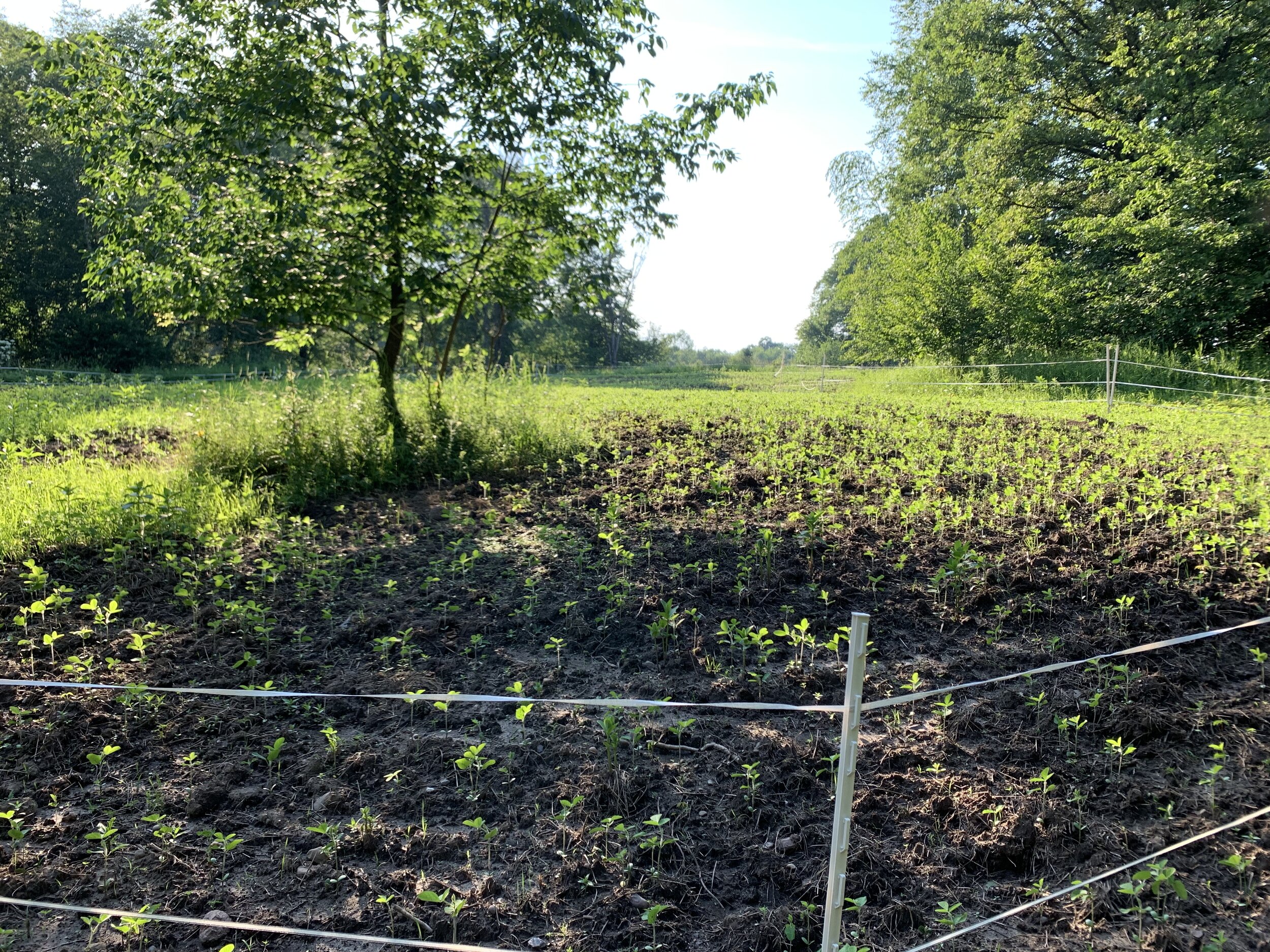
Last year was a really wet spring where I live and hunt. I wasn’t able to start planting my food plots until late May and into early June. I also ran into multiple tractor problems which further delayed when I was able to plant and impacted how poorly my food plots turned out. I was at least able to double the size of my soybean food plot to about an acre in size. Along with the larger soybean food plot came a larger dual-perimeter fencing setup. I became a strong believer in dual-perimeter fences after seeing their effectiveness the last two seasons. I chose to set up a dual-perimeter fence because I planted a more expensive brand of soybeans (Eagle Seed Forage Soybeans) and wanted to maximize the potential of my investment. It was amazing to see soybeans planted on the outside of the fence were eaten down all the way to the ground while the ones on the inside grew 4-5 feet tall with 50+ pods on each plant.
In another food plot, I made my first attempt at planting half an acre of cowpeas. I’ll definitely give them another shot in the future, but they failed to take off in 2019. Not only did I start planting them too late (because of the tractor problems), but I wasn’t able to do the level of ground preparation and aggressive weed control that would have been needed to allow the cowpeas to thrive. Ultimately I should have sacrificed this summer food plot and prepared it solely as a fall or cool-season food plot.
I like to plant corn on my property. Where I hunt, standing corn is king when it comes to late November and December deer hunting. All of the large ag fields are harvested by then and there is a high potential for the ground to be covered in snow. This makes standing corn an easy target for deer. It also doesn’t hurt that corn is a carbohydrate, which is an easy source of energy for deer, especially after going through the rut. You should only be planting corn for this specific reason. A food plot of corn will never compete with the fields planted by farmers whose livelihood depends on getting the most out of every acre. If you live in the northern half of the US where ag fields are plentiful, all of your food plots should be focused on being productive and at their maximum potential during October through January. I also strategically place my one corn food plot to provide cover from people spotlighting and to cover my approach to the south side of my property. Needless to say, even though I had an incredibly short maturity corn, it was planted too late. Also, for the first time ever I had a family of Sandhill cranes nest on my property and raise two babies which was a privilege to witness, although they did eat a lot of the corn seed.
I’ve tried making sunflowers work for two years in a row now. Deer love eating young sunflowers, songbirds love mature sunflowers, and they just look nice. Planted strategically, they make for great screening. The sunflowers last year only grew about 2 feet tall when they should have been in the 6-8 foot range. Weed competition was an issue, as well as over-saturated fields.
I also have a rotation of clover planted. I like to plant clover in strips next to the woods line or before getting into taller food plots to create food attraction that is resilient to a lot of weather conditions. Most importantly I plant clover in these areas to create another “edge”. As we’ll talk about throughout this site, edges create movement. Most of my clover plantings were only 2 years old this last season and were looking great. I did spray them with Clethodim to remove some of the unwanted grasses and weeds and it really helped the clover take off. It also helps to mow the clover once the flowers start to turn black. This helps reseed the plot and clover typically grows faster than other grasses so the cut and regrowth can suffocate out other undesirable plants in your foot plot. I had two smaller clover plots that were coming up on 4 years old. These didn’t provide much value so I decided to disc them over and plant some brassicas. This was definitely a blessing and a curse. I wanted to get some tillage radishes growing because they usually feed deer twice if done right — once when they eat the tops and the second time when food becomes a little more scare and they dig up the taproots. The tillage radish also provides slow release fertilizer as they decompose the following year. The brassicas had a hard time maturing because they were an absolute magnet for the deer. Right before bow season, as the brassica tops were beginning to yellow, I spread Urea on the plots and within a few days, they almost doubled in size and turned a vibrant green. They didn’t last much longer after that.
Mock Scrapes, Stands, and Cameras
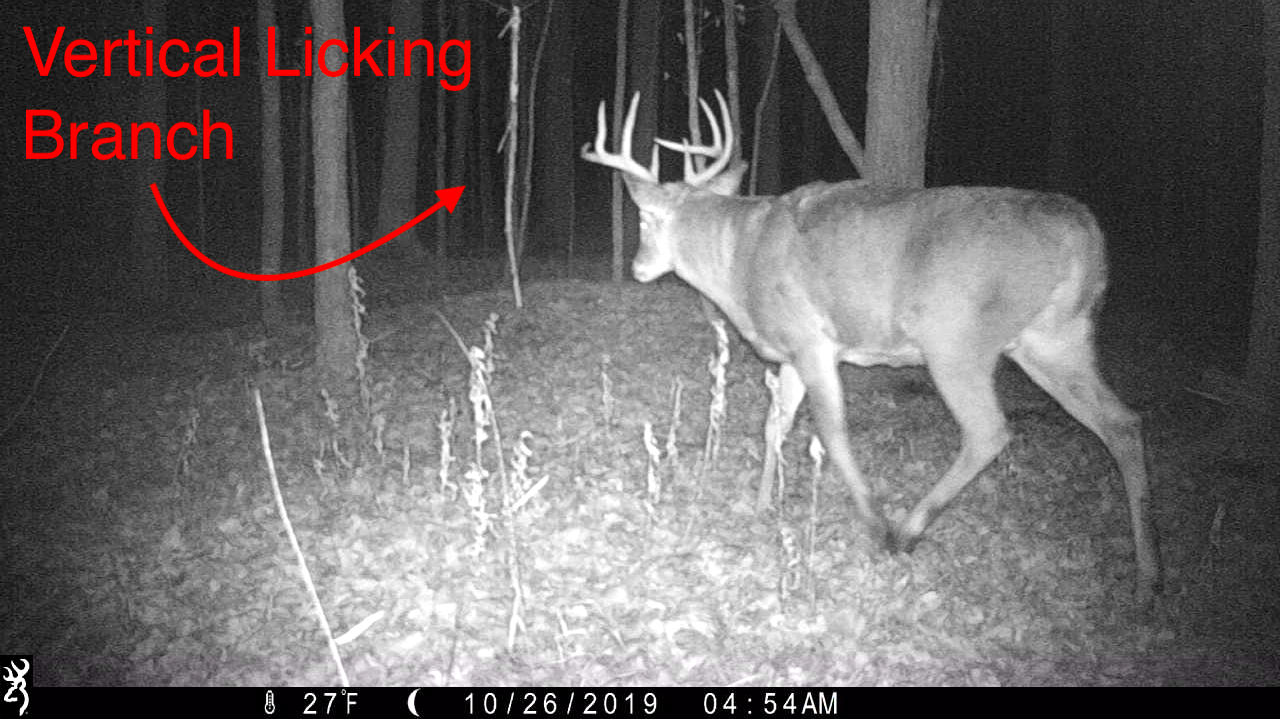
This last year was the first time I made mock scrapes utilizing vertical licking branches. I am a total believer in this set up. These mock scrapes were hammered all season by almost every deer that walked by them, including the biggest deer I had on the property. This is also the first year I didn’t use any synthetic scents around my mock scrapes or really anywhere in the woods. I’ll write more about mock scrapes with vertical licking branches and scents in a future post.
Last season I also hung that most stands I’ve ever had on my property—a mix of ladder stands and hanging stands. Although I had more stands that I’ve ever had on my property, there were a few stands I only ever sat in once or twice at most.
Finally, this past season was the best year of trail cameras pictures I’ve ever had on my property. I attribute this to the years of habitat improvement work. I also had the privilege of buying and setting up enough cameras to cover even more of my property, which helped inform me even more about the deer around my property.
Bow Season
2019 was my shortest bow season so far. It lasted about 4 hours. Opening day was a bit on the warm side but the wind direction was favorable for the plan I had in mind. I wanted to set up on my thriving soybean food plot. I had just dropped the dual-perimeter fence 5 days prior and immediately saw evidence that deer had discovered the soybeans. I knew they’d bit hitting the plot around 4PM given the information I observed from my trail cameras. I decided to head out to my stand at 2PM. Like clockwork, the deer started to pour into the field around 4PM. Once the first doe entered the plot, over 30 more deer came out of the woods. It was amazing to see my plan come together perfectly. Moments later, a nice 8-pointer stepped out at 30 yards. With a perfectly placed, broadside, double-lung shot, I had venison on the ground 60 yards away and my bow season was over.
Gun Season
Since I had to sit out the rest of bow season, I was crawling up the walls in anticipation of gun season. On opening day I pulled my first ever sunrise to sunset hunt in a stand without ever coming down. I once again saw a LOT of deer but I wanted to be selective since I took a buck during bow season. I was able to watch another nice 8 pointer, definitely a shooter, bed down with a small group of does for over 2 hours. Unfortunately it was about 200 yards away and never presented a shot.
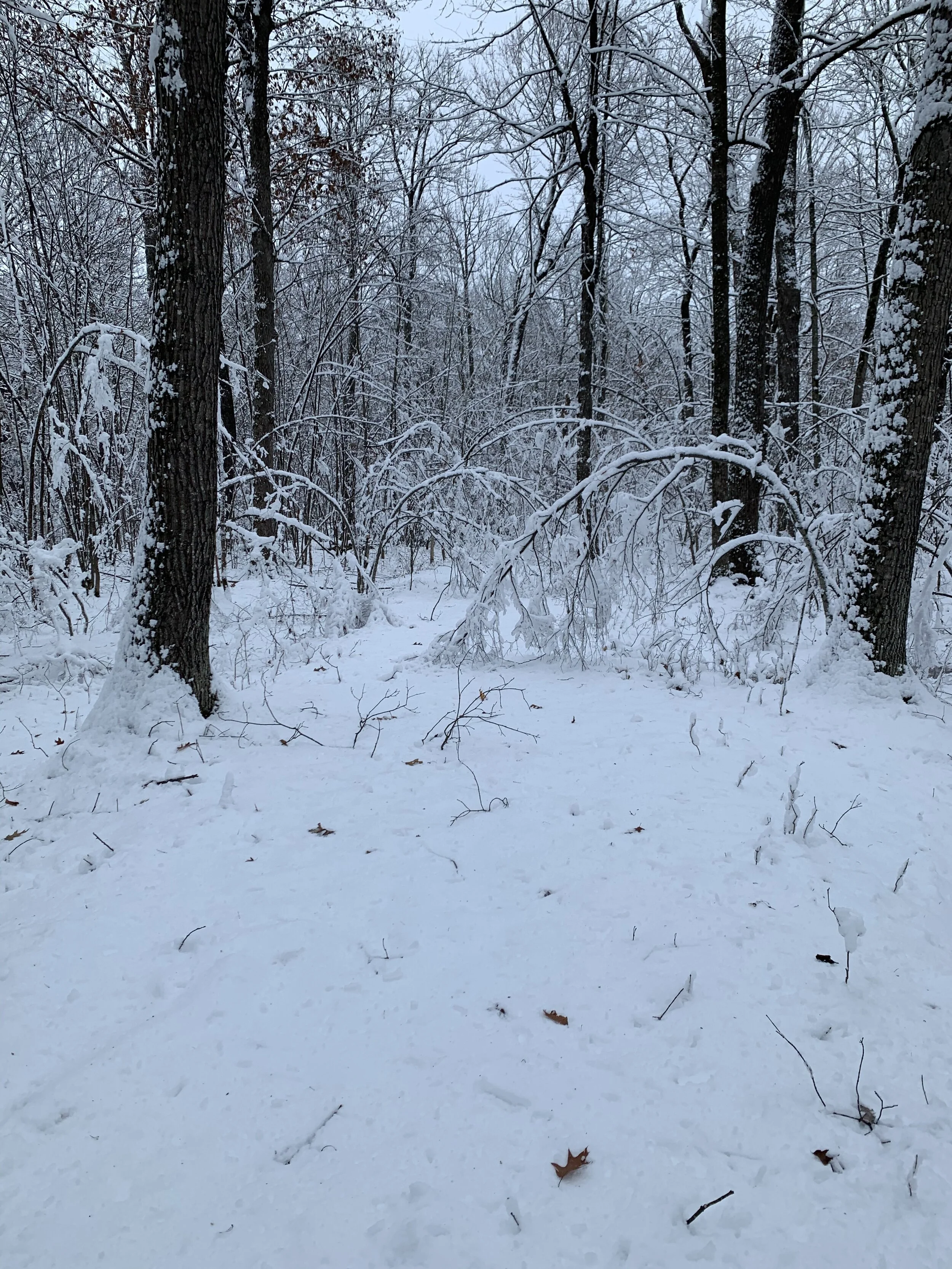
The rest of the gun season was tough. The timing of the Wisconsin gun season was really late in November which meant most bucks were on lockdown or not as active as they were resting from the rut. On top of that, a few days into the gun season, the weather turned for the worse. It had snowed, rained, and froze so much and so quickly that the normal trails in the woods were completely impassable due to trees having bent over, snapped, or otherwise fallen. There were just a lot of things that weren’t favorable for the gun season. After opening weekend, I didn’t see more than a handful of deer the rest of the gun season. The regular gun season then rolls into a muzzleloader-only season which resulted in the same lack of activity. I probably saw more deer on the opening day of bow season than I did all of the gun and muzzleloader seasons. I did not harvest a buck during the gun season.
In Wisconsin, we have a 4 day, antlerless-only season, that immediately follows the muzzleloader season. It’s the one season you hope you don’t have to hunt, because it can be unbearably cold, but it’s also the one season where you can make the most impact on your local deer herd. It’s also the best possible time to harvest a doe—more on that in a future post. Having a doe management plan is important to help keep the herd healthy by balancing the size of the herd with the amount of available food. It also helps balance the doe-to-buck ratio. When you harvest a doe, you might actually be removing 2 or even 3 deer—a high percentage of mature does give birth to twins! Harvesting a doe also impacts changes to the matriarch. I usually try to target the largest and oldest doe because they’re usually the wisest . Not only do I get more venison but there’s a reason they’ve gotten to their age. They’ve learned to avoid hunters, cars, predators, etc. These are usually the does that are the first to find your stands, smell your scent, and alert all the surrounding deer.
Based on the information I gathered from trail cameras and observations during the summer, I set a goal to harvest at least 2 does. I asked a friend to come over a hunt my property with me, and I had a really good idea of where does were most likely to be bedding. We came up with a plan to have one of us sit on the north side of the property, which was quick and easy to get to. Meanwhile, the other person would circle all the way around and approach another stand from the south that was positioned closer to the bedding area. Circling all the way around would take about 20 minutes to get to the stand. Before I even got to my stand, a gun shot had already gone off. I immediately stopped in my tracks to see what would happen and a deer came up within 40 yards looking back to where the shot came from, completely oblivious to me standing there. A moment later I took my shot and just like that, within 30 minutes, we had two does down. Once again a plan was perfectly executed. It was a great way to finish the year and was a hunt I’ll never forget. I also got a chest freezer full of venison!
What were some of your highlights and lowlights from last season? Share them in the comments below!