
Setting Hunting Goals
Setting goals can be difficult, but as long as you set SMART goals, you’ll always maintain positive momentum to achieving larger goals.

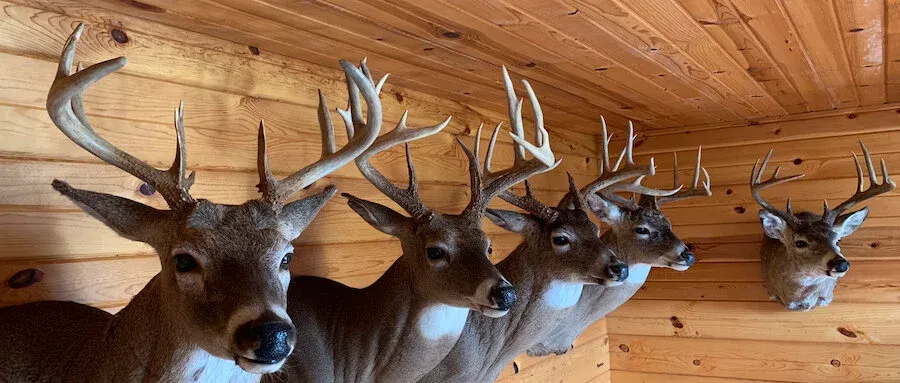
This is one thing that everyone should think about before they start their hunting journey. Whether it’s going on your first ever hunt, scouting some new public land, planning out next year’s food plot, or hunting your family’s farm for the 10th season in a row, setting goals will help set the tone for your hunting successes.
Your goals should not simply be defined as the number of points, rack score, body weight, or age of a deer.
There are a lot of physical demands when it comes to hunting — long walks, climbing, dragging your harvest up hills and through swamps — but it’s important to also develop and strengthen the mental demands hunting can have on you. Some of these mental demands, like patience waiting for the perfect shot or sitting perfectly still while a tom struts 60 yards away for 45 minutes, are only learned through experience. The type of mental tools I’m hoping to help sharpen are how to keep a positive mental outlook by setting realistic and measurable goals to find victories in everything you do and maintain positive momentum. All the small victories will lead to larger victories. My hope is you can use some of the insights laid out here as a guideline to setting your own goals, and more importantly, help adjust your mental approach to hunting.
Your goals should not simply be defined by the number of points, rack score, body weight, or age of a deer. Success should be measured by setting and achieving goals that are specific to your experience level and crafted specifically for your situation (where you are hunting, what season you are hunting, etc.) As an example, when it comes to hunting whitetails, it’s easy to think about that perfect 160” 10-pointer walking out of the woods within 20 yards of your stand when you surround yourself with hunting shows, magazines, and YouTube channels showing this exact encounter week after week with seemingly little to no effort. You must remember though, their situation is not the same as yours. Not only are they creating content to make money — and what makes more money than showing the largest possible trophy — but where they are hunting, the amount of disposable income they can put towards hunting, and whether or not hunting is their full time job, are some of the factors you have to ignore or at least customize when setting your own goals. Sure, shooting that perfect 160” 10-point buck is an amazing feat that anyone should be proud of but is that a realistic goal for everybody? If you end up shooting that deer but then have to track it and leave it lay overnight only to find it in the morning half eaten by coyotes and unable to harvest any usable venison, is that a goal you would be proud of? Or is a better goal taking any mature buck that presents itself a perfect shooting opportunity and placing the perfect double lung shot, harvesting, and then later sharing venison with your family a better goal? Combining the perfect shot with a buck of that class would be best, but my point is there are many factors you should consider in setting your goals. One of the easiest approaches to setting goals is to keep the SMART criteria for setting goals in mind. SMART is an acronym for Specific, Measurable, Achievable, Realistic, and Timely.
When I first started hunting, I got lost in the fantasy of the previously mentioned scenario. It wasn’t until I learned more about my land and the surrounding area that I realized I needed to set more realistic goals. Where I live and primarily hunt, there are many 10 acre parcels with multiple people hunting them during the deer season. That is a lot of hunting pressure. Without forming some kind of co-op with the neighboring properties and sharing common goals on age class structure, this means that a 3.5 year old deer is considered rare. Seeing one while out hunting would be even more rare and even more so for it to walk within 40 yards of my stand and provide a shooting opportunity. The reality is I’m likely not going to see a Boone and Crockett class buck without implementing a number of land improvement practices, only hunting extremely favorable conditions, and having a little bit of luck. Therefore, for my first couple of years on my property, I adjusted my expectations and focused my goals on good land and herd management strategies to increase the odds of that type of buck living on my property in the future. This also gave me time to focus on goals related to perfecting my shooting skills.
I would also encourage you to think of goals in sets of three: short, medium, and long-term. For example, today’s goal could be to hunt a particular stand and watch deer movement (short), this year’s goal would be to harvest a mature doe (medium), and next year’s goal would be to see more deer on your trail cameras (long). Goals should be fluid and always changing. Remember too that every action you take as a hunter should be with a purpose in mind. Attempt to learn something every time you walk in the woods or observe trail camera pictures, then take what you learn and adjust your goals.
As a final reminder, your goals are specific to you and your situation. Nobody should be judging you when you share the results of a hunt or where you landed with your goals (assuming the hunt was legal, ethical, and fair chase). Harvesting any animal is difficult and we’re not all going to get a cover page trophy. If you are proud of hitting your goals and somebody has something negative to say, it might be time to find a different community of people to share your experiences with. Share that 6-point, 2.5 year old with pride if that’s what is appropriate and realistic for your property or experience level.