
Understanding COI: Why We Focus on Low Coefficient of Inbreeding
COI is a useful tool for breeding decisions, but it's not a rule. Here's how we use it — and why the number alone doesn't tell the whole story.

If you've spent any time researching KuneKune breeders, you've probably seen "low COI" mentioned as a selling point. But what does COI actually mean, and how much should it factor into your breeding decisions? Here's our take — and why we think it's a useful tool, not a hard rule.
What Is COI?
COI stands for Coefficient of Inbreeding. It's a percentage that represents how genetically similar a pig's parents are to each other. The higher the COI, the more likely that pig is to inherit identical copies of genes from both sides of its pedigree.
A COI of 0% would mean the parents share no common ancestors (practically impossible in a breed with limited foundation stock). A COI of 25% would be equivalent to a parent-offspring or full-sibling pairing. Most breeders aim to keep COI somewhere in the single digits, though what's considered "acceptable" varies widely.
The calculation looks at a pig's pedigree over a set number of generations – typically 6 to 10. The more generations you include, the more accurate (and usually higher) the number becomes.
Why COI Matters – Sometimes
High COI increases the chances of "inbreeding depression," which can show up as reduced fertility, weaker immune systems, smaller litter sizes, or other health issues. When both parents carry the same recessive genes, problems that might otherwise stay hidden can surface in their offspring.
This is basic genetics, and it's real. We've seen it in other livestock breeds that were bottlenecked through small populations, and KuneKunes – having nearly gone extinct in the 1970s – are working from a relatively limited genetic base to begin with.
So yes, COI is worth paying attention to.
But Let's Keep Some Perspective
Here's the thing: pigs in the wild don't know about COI. They don't consult pedigree databases before breeding. Feral pig populations have thrived for centuries without a registrar calculating coefficients. Nature selects for what works, and it's remarkably good at it.
There's also an old joke in livestock breeding: it's called "line-breeding" when it works, and "inbreeding" when it doesn't. The only difference is the outcome. Breeders have used tight line-breeding for generations to lock in desirable traits – compact builds, specific colorations, calm temperaments. Sometimes it works beautifully. Sometimes it surfaces problems. The COI number alone doesn't tell you which you'll get.
Many successful KuneKune breeders focus primarily on conformation and temperament, breeding the best to the best year after year, and they produce excellent pigs. They're not ignoring genetics – they're selecting for observable traits rather than optimizing a single metric.
How We Use COI
On our farm, we treat COI as one data point among many. When planning a pairing, we consider:
- Conformation: Does this pairing make sense structurally? Will it improve or maintain breed standard?
- Temperament: Are both parents calm, friendly, and easy to handle?
- Bloodline diversity: Are we maintaining a variety of boar and sow lines?
- Health history: Have the parents produced healthy litters? Any recurring issues?
- COI: What's the projected coefficient, and are we comfortable with it?
We generally aim to keep our litters under 10% COI calculated over 10 generations, but we don't treat that as a hard ceiling. A pairing at 12% with exceptional conformation and complementary bloodlines might make more sense than a 6% pairing that compromises on traits we care about.
The goal isn't the lowest possible number – it's healthy pigs that meet breed standard and will thrive on their new farms.
The Registry Factor
One practical reason to pay attention to COI: registries track it, and buyers increasingly ask about it. If you're selling registered breeding stock, being able to speak to your COI philosophy – whatever it is – shows you're thinking about the long-term health of your program and the breed.
This doesn't mean you need to chase single-digit COIs at all costs. It means you should understand what you're doing and why.
Finding COI Information
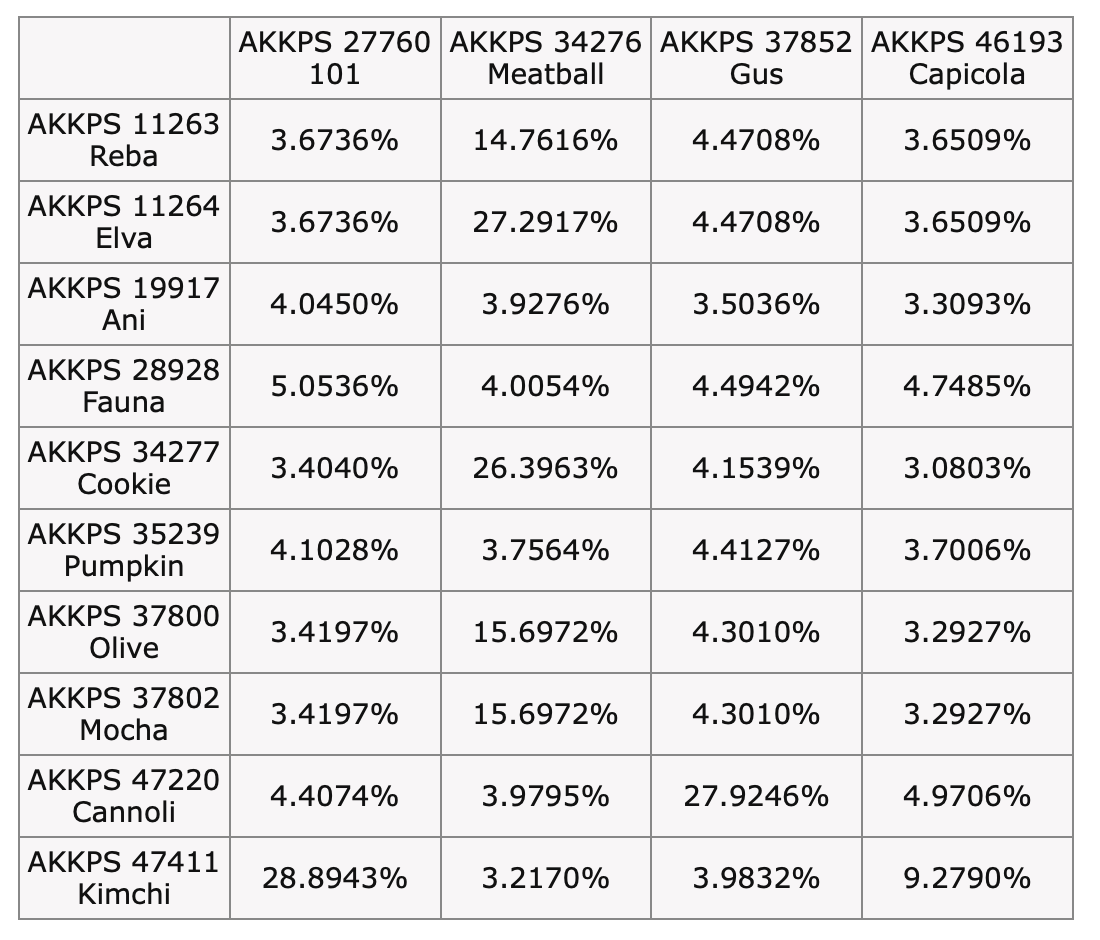
If you're registered with AKKPS, their online pedigree database can calculate COI for potential pairings. This makes it easy to experiment with different combinations before committing to a breeding. Here is an example using our pigs:
If you're buying piglets, don't hesitate to ask the breeder about COI. A good breeder will either know the number or be able to look it up. If they dismiss the question entirely or don't know what COI means, that might tell you something about their program.
The Bottom Line
COI is a tool for making informed breeding decisions. It's not a guarantee of health, and a low number doesn't automatically mean a better pig. Plenty of low-COI pigs have mediocre conformation, and plenty of higher-COI pigs are outstanding examples of the breed.
Use the data. Consider the context. Breed thoughtfully.
And remember – the pigs themselves couldn't care less about the math. They just want belly rubs and treats!
Questions about COI or how we plan our pairings? Drop them in the comments!